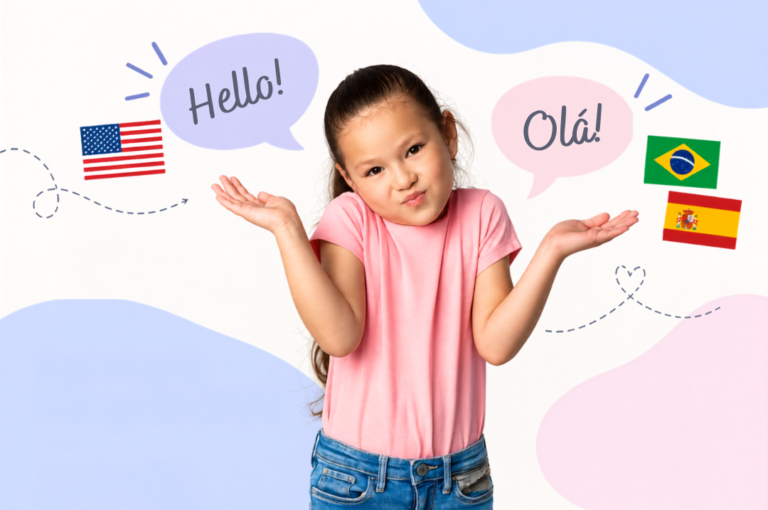
If you’re raising a child in a bilingual household, chances are you’ve wondered—or been told—that speaking more than one language at home could delay your child’s speech development. This is one of the most common concerns we hear from parents, and we want to reassure you: learning two languages does not cause speech delay.
In fact, it’s quite the opposite.
Bilingualism Is a Gift, Not a Risk
Raising your child to understand and speak two languages is one of the most valuable gifts you can give them. Research consistently shows that bilingual children are not only capable of learning multiple languages from a young age, but they also tend to develop strong cognitive skills, including better problem-solving abilities, mental flexibility, and enhanced memory.
Yes, bilingual children may sometimes “mix” languages—this is called code-switching, and it’s completely normal. For example, a child might say “Quero more juice” or “Let’s brincar outside.” Far from being a sign of confusion or delay, this blending of languages is a healthy and expected part of bilingual development. It shows that your child is absorbing both languages and learning to use them in context. Over time, they naturally sort out when and where to use each language based on their environment.
What Speech Delay Really Looks Like
It’s important to understand the difference between a true speech or language delay and the normal patterns of bilingual learning. Speech delays refer to a child not meeting typical milestones—like babbling, saying first words, or combining words—within the expected age range, regardless of how many languages they are exposed to.
If a child is delayed, they will likely show signs in both languages, not just one. For example, they might have limited vocabulary, trouble combining words, or difficulty being understood by familiar listeners in any language. These are the kinds of concerns that should be evaluated by a speech-language pathologist—not simply the fact that the child is learning more than one language.
Keep Speaking Your Languages
So what’s the best thing you can do as a parent? Keep speaking both languages. Speak to your child in the language that feels most natural to you. The warmth, love, and connection that come through authentic communication are powerful—and they support healthy language development, no matter which language you’re using.
By continuing to expose your child to two languages, you’re helping them develop deeper social connections, cultural awareness, and brain-building skills that will benefit them for life.
When to Seek Help
If you do have questions or concerns about your child’s language development—especially if your child isn’t meeting key milestones—it’s always a good idea to reach out. A speech evaluation can give you clarity, peace of mind, and guidance tailored to your child’s unique needs.
Have questions about your bilingual child’s speech development? We’re here to help. Contact Provita to schedule a consultation today.
📍 Visit us in Boca Raton or Port St. Lucie
🌐 provitaspeech.com
📲 (954) 666-2942 | (561) 358-2550 | (772) 292-7112