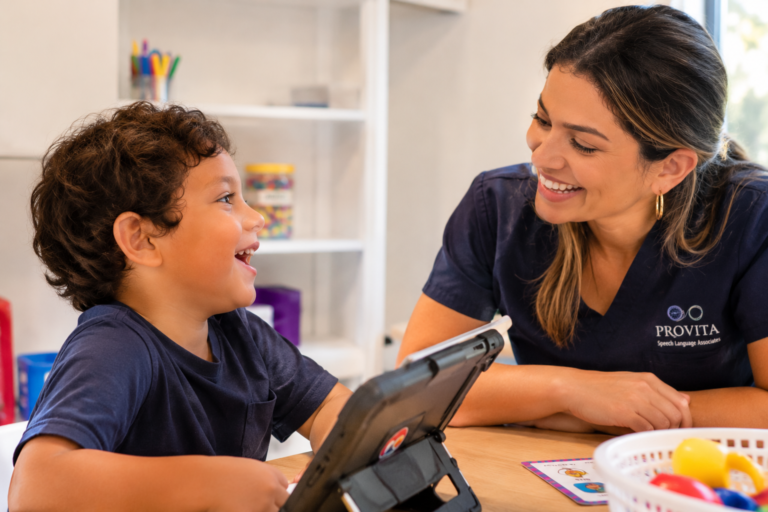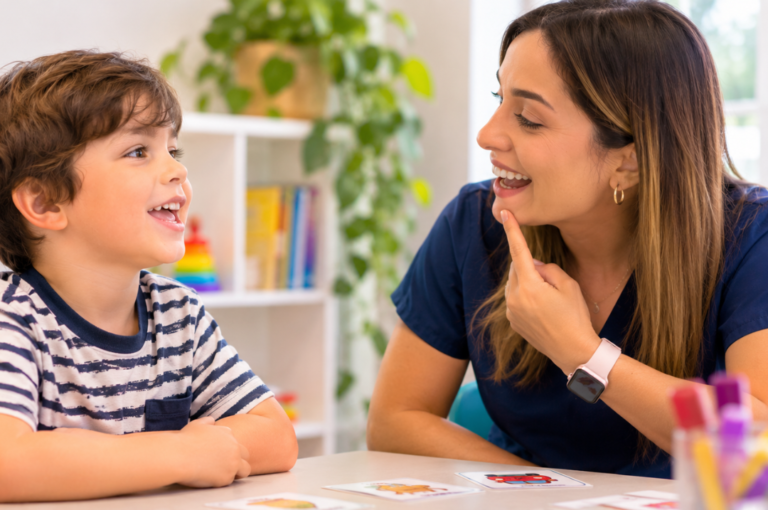
Discover eight simple, meaningful ways to connect with your neurodivergent child through play, support communication, and enjoy everyday moments together.
Play is one of the ways children explore the world, express themselves, and connect with the people around them.
But not every child plays in the same way.
Some children love imaginative stories and pretend games. Others prefer lining up toys, exploring how objects move, repeating favorite activities, or focusing deeply on specific interests.
For neurodivergent children, play may look different from what adults traditionally expect. And that’s okay.
Meaningful play doesn’t have to follow a particular script.
Sometimes, the most valuable moments happen when parents stop trying to direct an activity and begin paying attention to what their child already enjoys.
Whether your child communicates through spoken words, gestures, facial expressions, sounds, or augmentative and alternative communication (AAC), play can create opportunities for shared enjoyment and connection.
And you don’t need expensive toys, complicated activities, or a perfectly planned routine to get started.
Here are eight simple ways to connect through play with your neurodivergent child.
Why Is Play Important for Neurodivergent Children?
Play can support many areas of childhood development, including communication, social interaction, creativity, problem-solving, and emotional connection.
However, the benefits of play aren’t limited to learning specific skills.
Play also gives children opportunities to explore their interests, experience enjoyment, and interact with others in ways that feel comfortable and meaningful to them.
For neurodivergent children, including autistic children and children with other developmental differences, respecting individual preferences can be especially important.
Some children enjoy highly interactive games, while others prefer quieter activities, predictable routines, or independent exploration.
The goal isn’t to make every child play in the same way. It’s to create opportunities for connection that respect who they are.
When parents follow their child’s interests and respond to their communication attempts, everyday play can become a natural opportunity to strengthen relationships and support developing skills.
1. Get Close and Join Their Play
Sometimes, connecting begins with something as simple as being nearby.
Instead of immediately introducing a new activity, take a moment to observe what your child is doing.
Are they building a tower? Spinning the wheels of a toy car? Arranging objects? Looking through a favorite book?
You might sit beside them, show interest, or participate when they seem comfortable with your presence.
You don’t need to take control of the activity.
For some children, simply having a parent nearby and sharing the experience can be meaningful.
Try this: If your child is building with blocks, sit nearby and build something of your own. Notice whether they show interest in what you’re doing or invite you to participate.
Remember that not every child wants someone to join every activity. Respecting their space and preferences is also part of building connection.
2. Add Simple Words to Everyday Play
You don’t need to ask constant questions to encourage language development.
Sometimes, describing what your child is already doing can create natural opportunities for communication.
For example:
- “Fast car!”
- “Big tower!”
- “More bubbles!”
- “The ball is rolling!”
- “It fell down!”
These simple comments connect language to experiences that are already meaningful to your child.
Depending on their communication level, you might use single words, short phrases, or longer sentences.
For children who use AAC, gestures, or other communication methods, language modeling can also include demonstrating relevant words or messages using their established communication system.
Try this: During your child’s favorite activity, make a few simple comments about what is happening, then allow time for them to respond in their own way.
The goal is to share the experience, not to turn playtime into a series of questions or demands.
3. Bring in Music and Movement
Music and movement can create enjoyable opportunities for shared experiences.
Some children love singing, dancing, clapping, or moving along to familiar songs.
Others may enjoy creating rhythms with toys, exploring different sounds, or repeating a favorite movement.
These activities can provide opportunities for communication, imitation, turn-taking, and shared enjoyment.
For example, you might sing a familiar song and pause at a favorite part to see whether your child wants to continue.
Or you might take turns making sounds with a toy drum.
Try this: Choose a song or movement activity your child already enjoys. Follow their lead, and notice how they communicate whether they want more, want to stop, or want something to change.
It’s also important to respect sensory preferences. Not every child enjoys loud music, unexpected sounds, or active movement.
A quiet humming game or gentle rhythm may be more comfortable for some children.
4. Let Their Interests Guide You
Children are often more interested in activities that reflect their preferences.
Your child might love dinosaurs, trains, letters, animals, spinning objects, or a particular character.
Rather than trying to redirect them toward a different toy or activity, consider using those interests as a starting point for connection.
For example, if your child enjoys toy trains, you might explore different ways to participate:
- Build a track together.
- Describe where the train is going.
- Take turns adding pieces.
- Create a simple station.
- Talk about the train’s colors or movements.
The possibilities depend on what your child enjoys and how they prefer to interact.
Try this: Spend a few minutes observing your child’s favorite activity before deciding how to participate.
Their interests can help you discover what makes play meaningful to them.
5. Turn Favorite Toys Into Stories
Pretend play and storytelling can create opportunities to explore language, imagination, and different ideas.
But storytelling doesn’t need to be complicated.
A toy car can travel to a pretend grocery store. A stuffed animal can get ready for bed. A doll can have a birthday party.
You might begin with a simple action and see whether your child wants to participate.
For example:
“The bear is hungry!”
“Let’s give the bear a snack.”
“Oh! The bear wants more!”
These interactions can introduce vocabulary, action words, sequencing, and simple sentences.
However, not every child enjoys pretend play, and it shouldn’t be treated as a requirement for meaningful connection.
Try this: If your child enjoys imaginative activities, introduce a small story using a familiar toy. If they prefer exploring the toy in another way, follow that interest instead.
The purpose is to create shared enjoyment, not to insist on a particular type of play.
6. Try Doing What They Do
One way to show interest in your child’s play is to imitate an action they enjoy.
If your child taps a toy, you might gently tap a similar toy.
If they roll a car back and forth, you might roll another car nearby.
If they make a playful sound, you might respond with a similar sound, provided the interaction is welcome.
This approach can sometimes create opportunities for shared attention and back-and-forth interaction.
Your child may notice what you’re doing, repeat an action, change the activity, or invite you to continue.
Try this: Choose a simple action your child enjoys and imitate it using your own toy. Pause and observe how they respond.
Imitation should feel playful and respectful. If your child appears uncomfortable or prefers to continue independently, give them space.
Connection doesn’t require a particular response.
7. Build on Their Play, Little by Little
Once you’re participating in an activity your child enjoys, you may find opportunities to introduce a small variation.
For example, if your child is stacking blocks, you might add a different color or build a second tower.
If they enjoy rolling a ball, you might introduce a gentle back-and-forth game.
If they like toy animals, you could make one animal jump or walk.
These small changes may create opportunities for new vocabulary, problem-solving, and interaction.
But there’s no need to introduce something new every time.
Some children find comfort and enjoyment in repetition and predictability.
Try this: Add one small idea to a familiar activity and observe whether your child seems interested.
If they prefer the original activity, that’s okay. Following their preferences can be just as meaningful as introducing something new.
8. Choose Connection Over the “Right” Toy
Parents sometimes worry about whether they’re choosing the correct toys for their child’s age or developmental stage.
But meaningful play doesn’t depend on having the newest educational toy or following an activity exactly as described on the packaging.
A child may find joy in stacking cups, opening and closing containers, watching objects move, or exploring a favorite toy repeatedly.
These interests can create opportunities for shared experiences and communication.
Rather than focusing only on whether a toy is considered educational, consider asking:
“Does my child enjoy this?”
“Can we share this experience in a way that feels comfortable?”
“Does this activity create opportunities for communication or connection?”
Try this: Choose one familiar, safe, age-appropriate toy or activity your child already loves and explore how you might participate without taking over.
The most valuable part of play is often the interaction, not the object itself.
What If My Neurodivergent Child Prefers to Play Alone?
Some children enjoy independent play, and that preference deserves respect.
Playing alone doesn’t automatically mean a child is disconnected, uninterested in others, or missing an opportunity to learn.
For some neurodivergent children, independent activities can provide enjoyment, predictability, or a comfortable way to explore their interests.
Rather than interrupting every independent activity, parents can look for moments when their child seems open to shared interaction.
This might mean sitting nearby, offering a familiar object, responding to a communication attempt, or joining briefly when invited.
Connection can happen in many ways.
It doesn’t always require eye contact, conversation, physical closeness, or traditional turn-taking.
Respecting your child’s communication style and preferences is an important part of building a supportive relationship.
How Can Play Support Speech and Language Development?
Play can create opportunities to practice communication skills in meaningful contexts.
Depending on a child’s individual needs, these opportunities may involve:
- Expressing preferences and making choices.
- Requesting help or desired objects.
- Learning and using vocabulary.
- Understanding familiar words and directions.
- Participating in back-and-forth interactions.
- Sharing ideas and experiences.
- Using gestures, signs, pictures, or AAC to communicate.
A speech-language therapist can help identify which communication goals are most relevant for a particular child and recommend strategies that fit their interests and abilities.
Play-based approaches may be incorporated into individualized speech therapy to make communication opportunities more natural and engaging.
However, not every child benefits from the same activities or strategies.
The most appropriate approach should reflect the child’s communication needs, developmental profile, sensory preferences, and personal interests.
When Should Parents Consider Speech Therapy?
Every child develops differently, and neurodivergence itself does not automatically mean a child needs speech therapy.
However, an evaluation may be helpful when parents have concerns about how their child understands language, expresses needs, communicates with others, or participates in everyday interactions.
A speech-language evaluation can help identify a child’s communication strengths, areas where support may be beneficial, and appropriate next steps.
At Provita Speech Language Associates, we provide individualized pediatric therapy services designed to support children with different communication needs and abilities.
Families looking for speech therapy in West Palm Beach can explore our in-person services.
We also offer Online Speech Therapy for children who may benefit from virtual sessions.
Our goal is to help families understand their options and find an approach that supports their child’s individual communication journey.
Meaningful Play Begins With Connection
There isn’t one correct way to play with your neurodivergent child.
Some days, connection might happen while building a tower together.
Other days, it might happen through a favorite song, a shared laugh, a repeated movement, or simply sitting nearby while your child explores something they love.
You don’t have to introduce a new activity every day or turn playtime into a structured lesson.
Start with your child’s interests.
Notice how they communicate.
Respect their preferences.
And allow shared moments to develop naturally.
Because meaningful play isn’t about making your child interact in a particular way. It’s about finding ways to connect that feel right for them.
Looking for Support With Your Child’s Communication Development?
If you have questions about your child’s speech, language, or communication skills, the team at Provita Speech Language Associates is here to help.
We offer personalized pediatric speech therapy services, including in-person therapy in West Palm Beach and online therapy options.
💜 Contact Provita Speech Language Associates to schedule a speech and language evaluation and learn how we can support your child’s communication development.
🌎 provitaspeech.com
📍 In-Person & Online Available
📞 (954) 666-2942
📞 (561) 308-9792